Features
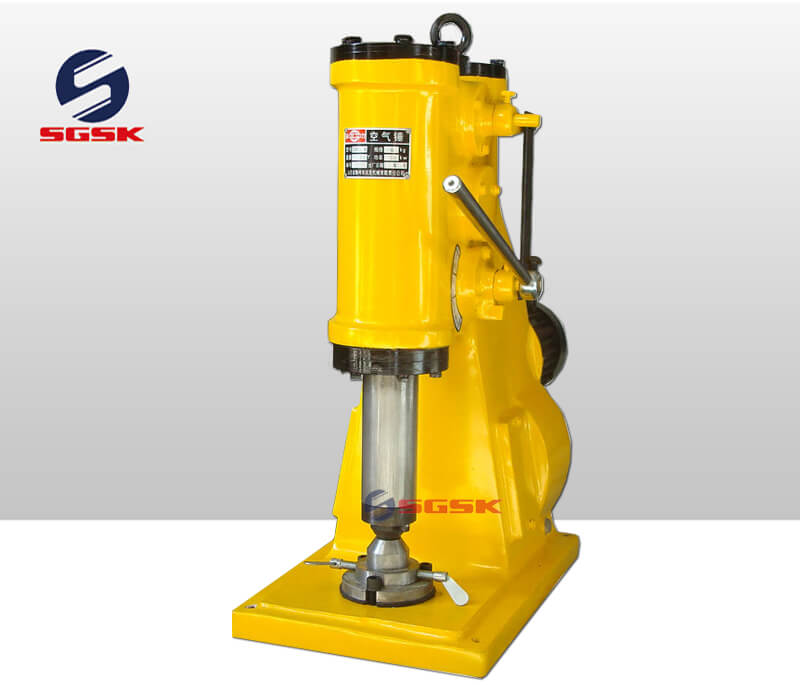
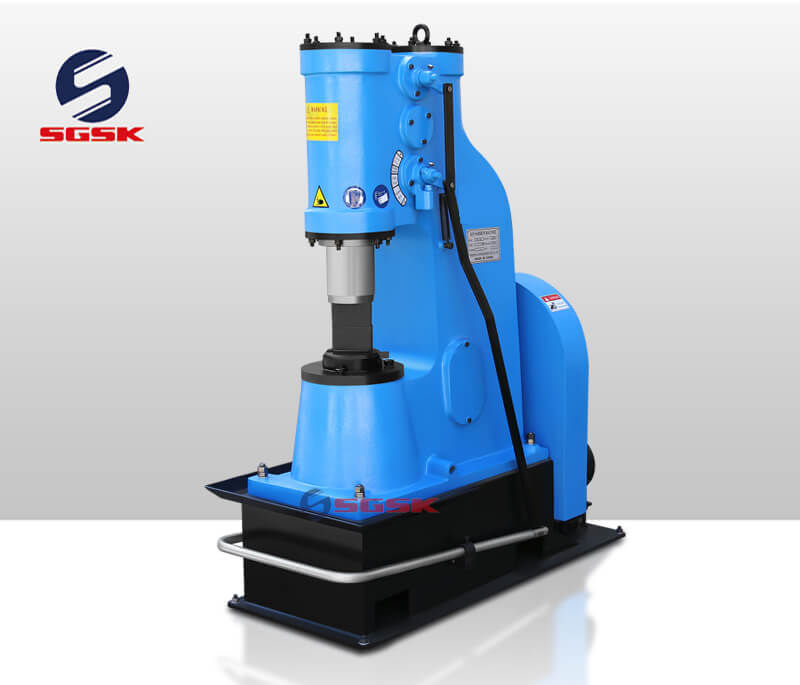
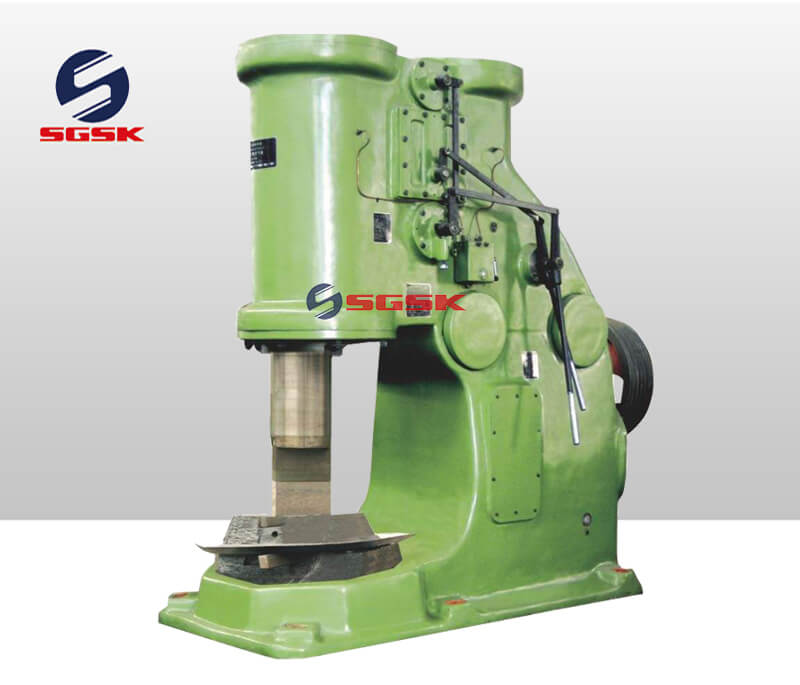
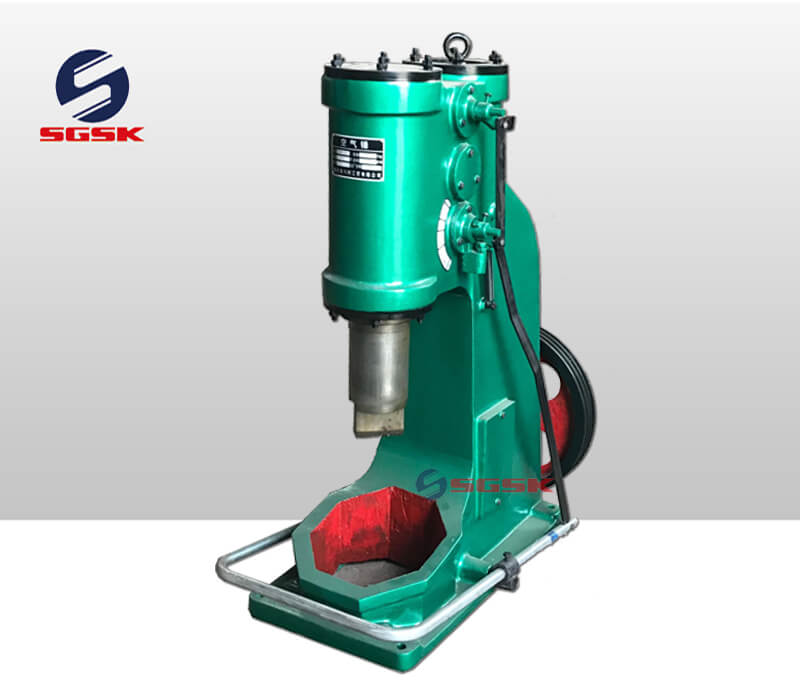
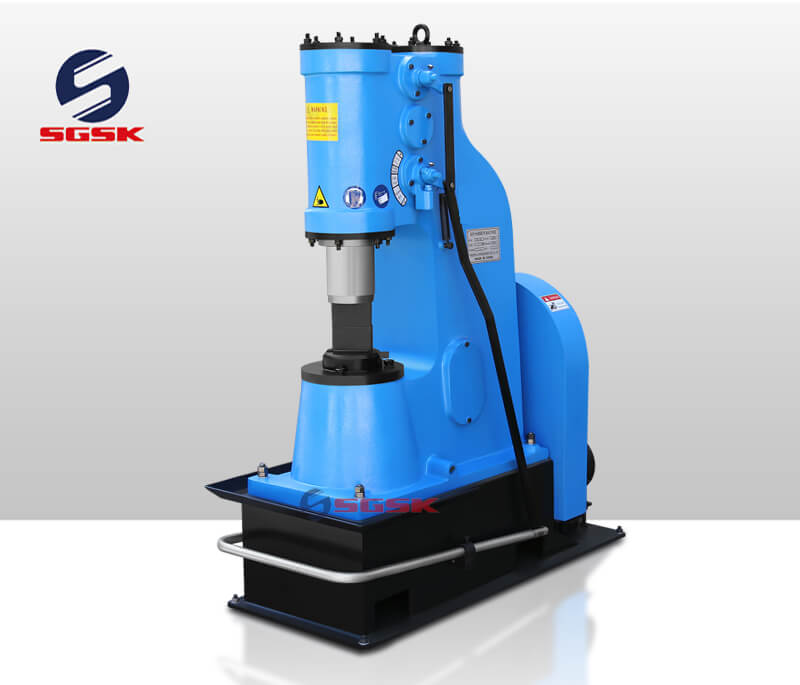
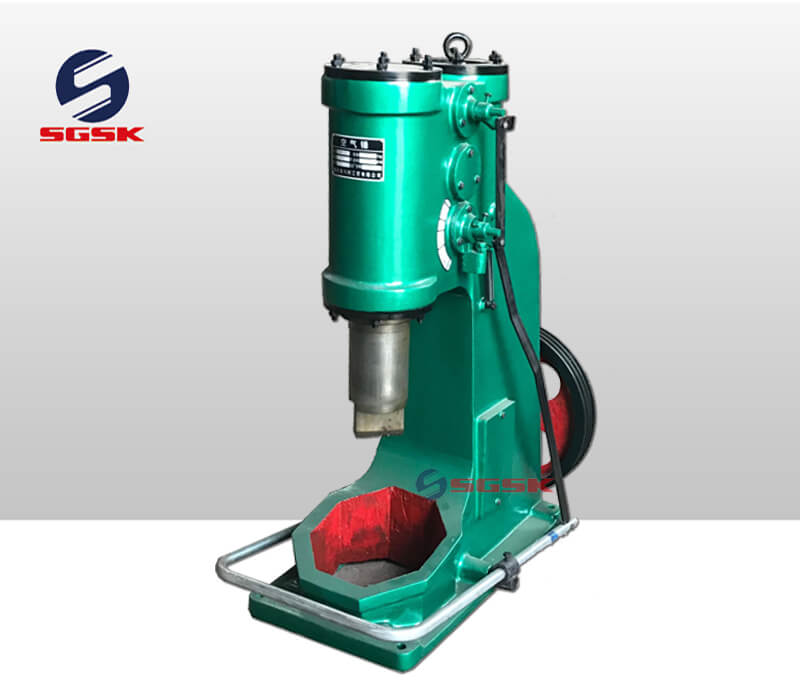
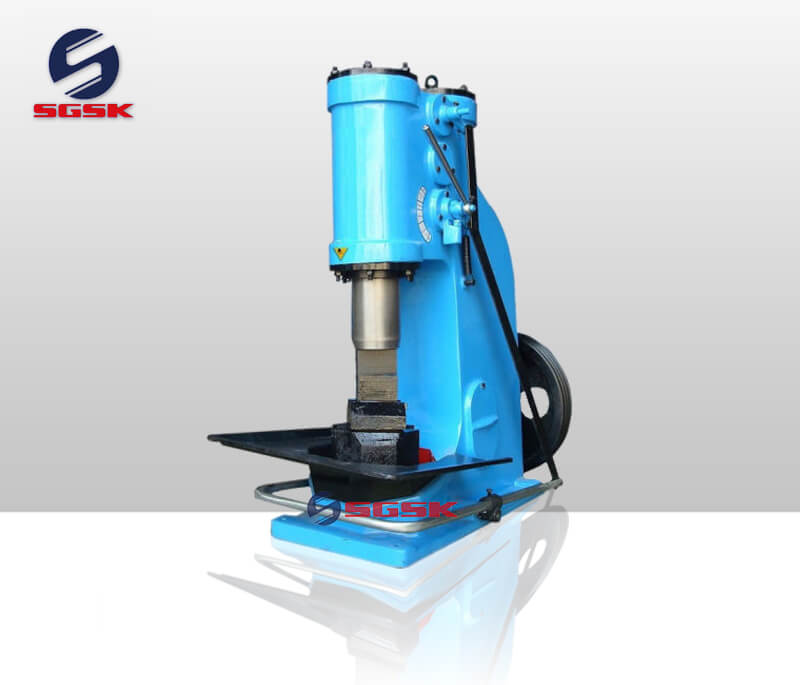
The GSK C41-6 Air Hammer Machine is a compact forging machine designed for light-duty metal forming, blacksmithing, artistic wrought-iron work and small open-die forging applications.
With a 6 kg falling-part weight, 0.066 kJ maximum hit energy and up to 248 blows per minute, the machine provides repetitive hammering power for small forging operations while occupying significantly less workshop space than larger forging hammers.
Measuring 480 × 340 × 670 mm and weighing approximately 126 kg, the C41-6 is particularly suitable for small blacksmith shops, metalworking workshops, training facilities and businesses that need a compact air hammer machine for light metal forging.
One of the main advantages of the C41-6 is its compact size.
With overall dimensions of only 480 × 340 × 670 mm, this small air hammer machine requires considerably less workshop space than larger forging hammers.
It is well suited to blacksmith shops, repair workshops, vocational training facilities and small metalworking businesses where available floor space is limited.
Repeated manual hammering can become inefficient when operators need to perform the same forming process continuously.
The C41-6 provides up to 248 blows per minute, helping improve efficiency during drawing, upsetting, bending and other light forging operations.
This repetitive striking capability makes the machine particularly useful for workshops that need higher productivity than manual forging can provide.
The C41-6 uses 6 kg falling parts and delivers a maximum hit energy of 0.066 kJ.
This positions the machine as a compact air hammer for small forged parts rather than a heavy-duty industrial forging hammer.
It is suitable for applications including:
Small metal components
Decorative forged products
Blacksmithing
Artistic wrought iron
Small agricultural tools
Light open-die forging
Repair and maintenance work
The machine is equipped with a 0.75 kW motor running at 1440 rpm.
For workshops that mainly process smaller forged components, this configuration provides a practical balance between machine capacity, installation requirements and power consumption.
The C41-6 weighs approximately 126 kg.
Compared with larger C41 forging hammers weighing several hundred kilograms or more, the compact machine is easier to position in smaller workshops and requires less installation space.
The C41-6 air hammer machine can perform a range of basic forging operations on appropriately sized heated metal workpieces.
Drawing reduces the cross-section of a heated workpiece while increasing its length.
This process is commonly used when producing bars, tapered components and elongated forged parts.
Upsetting compresses the length of a workpiece to increase its cross-section.
It can be used when forming thicker ends or preparing material for subsequent forging operations.
The machine can assist with bending heated metal into required angles or curved profiles.
This is useful for decorative metalwork, tools and other forged components.
Suitable dies and tooling can be used to produce or prepare holes in heated workpieces.
The hammer can assist with cutting and separating suitable heated metal during forging.
Twisting operations can be performed on suitable heated workpieces, particularly in decorative and artistic forging applications.
Before purchasing an air hammer machine, buyers should consider several important factors.
Different metals have different forging temperatures and deformation characteristics.
Provide the material grade or type you normally process so the appropriate hammer capacity can be evaluated.
Workpiece dimensions are one of the most important factors when selecting a forging hammer.
Provide the maximum diameter, square section or overall dimensions of the parts you plan to forge.
Clarify the operations that will be performed most frequently, such as:
Drawing
Upsetting
Bending
Punching
Twisting
Chiseling
This helps determine whether the C41-6 provides sufficient forging capacity.
A machine used occasionally in a blacksmith shop has different requirements from one used for repeated industrial production.
Providing expected daily or monthly production volume helps with machine selection.
Check the machine dimensions as well as the operating and safety space required around the equipment before installation.
Confirm the required voltage, frequency and electrical configuration before placing an order.
For international buyers, GSK can discuss electrical requirements according to the destination market.
GSK is a manufacturer of CNC and conventional metalworking machinery with more than 30 years of machine-tool manufacturing experience.
GSK has accumulated more than three decades of experience in the design, production and supply of metalworking machinery.
Its product portfolio includes CNC machine tools, lathes, milling machines, grinding machines, drilling machines and metal forming equipment.
GSK operates a manufacturing facility covering more than 100,000 square meters.
The company has more than 200 employees supporting manufacturing, assembly, testing and international sales.
GSK has an annual machine-tool production capacity of approximately 2,500 sets.
This enables the company to support both individual machine purchases and larger equipment sourcing projects.
GSK equipment has been supplied to customers in more than 150 countries and regions.
Experience with international projects helps support overseas buyers with equipment selection, documentation, export packaging and technical communication.
GSK applies more than 24 inspection and quality-control procedures during machine manufacturing and testing.
Machines are inspected before shipment according to the confirmed configuration and order requirements.
OEM and ODM services are available for distributors, industrial buyers and customers with specific equipment requirements.
Project requirements can be discussed before order confirmation.
GSK provides an 18-month warranty and technical support for international customers.
Purchasing an air hammer machine from China involves more than comparing machine specifications.
International buyers should also consider inspection, documentation, packaging and after-sales technical support.
GSK supports international machine-tool projects and can discuss certification and documentation requirements according to the destination market.
Available certification and inspection capabilities across GSK's manufacturing business include ISO, CE, SGS, EAC, TUV and BV.
Specific certification requirements should be confirmed before placing an order.
The C41-6 is used for light metal forging operations including drawing, upsetting, bending, punching, chiseling and twisting. It is suitable for blacksmithing, decorative metalworking, small forged parts and training applications.
It is suitable for light-duty production and smaller forged components. For larger workpieces or applications requiring substantially higher striking energy, a larger C41 air hammer should be selected.
The machine has 6 kg falling parts, a maximum hit energy of 0.066 kJ and a hammering frequency of up to 248 blows per minute.
The standard specification includes a 0.75 kW motor with a rated speed of 1440 rpm.
Its overall dimensions are approximately 480 × 340 × 670 mm, with a total machine weight of approximately 126 kg.
Yes. Its compact dimensions, relatively low machine weight and light forging capacity make it particularly suitable for small blacksmith and metalworking workshops.
Yes. GSK offers other C41 air hammer machines with higher falling weights and forging capacities for larger workpieces and heavier forging applications.
Provide the workpiece material, maximum dimensions, forging process and production requirements. Machine size should be selected according to actual forging demand rather than falling weight alone.
Application
The C41-6 Air Hammer Machine is particularly suitable for applications where workpieces are relatively small and a heavy industrial forging hammer is unnecessary.
Typical applications include:
Blacksmith workshops
Artistic wrought-iron production
Decorative metal components
Small agricultural tools
Hand-forged metal products
Small open-die forged parts
Metal repair workshops
Forging training centers
Vocational schools
Prototype forged parts
Small-batch production
Product Main Technical Parameters
Air Hammer Machine Main Performance Characteristics:
1.smallest metal forging hammer
2.multifunctional forging
3.easy operation and move
4.high efficiency and quality
Air Hammer Machine Application:
Pneumatic forging hammer is widely used for general forging works, such as drawing-out, upsetting, punching, chiseling, forging, welding, bending and twisting. It is also used for forge in bolster dies.
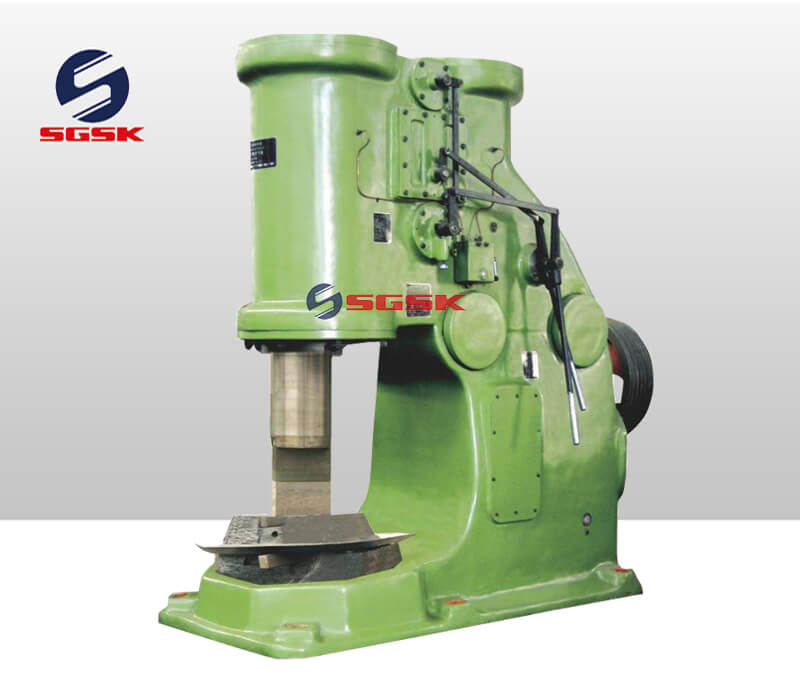
Air hammer is also called forging hammer, blacksmithing hammer, pneumatic forging hammer, power hammer and so on.
Air hammer falling weight at 6kg, 16kg, 20kg, 25kg, 40kg, 55kg, 75kg, 150kg,250kg mainly for artistic wrought iron, artistic forging, blacksmith, agriculture tools and small open die forging parts. .
C41-6 Air Hammer Machine main technical specification:
| Specifications | Unit | C41-6 | |
| Weight of falling parts | Kg | 6 | |
| Max. hit energy | Kj | 0.066 | |
| Hit number | min -1 | 248 | |
| Distance from bottom die surface to bottom surface of lead | mm | 175 | |
| Top axis to hammer body | mm | 100 | |
| Motor | Rate power | kw | 0.75 |
| speed | r.p.m | 1440 | |
| Overall dimension | mm | 480x340x670 | |
| Total weight | Kg | 126 | |
Navigation
Tel.: +86 632 5083 879
Mob.: +86 151 6326 5369
Wechat: +86 151 6326 5369
E-mail: info@gskequipment.com
WhatsApp: +86 151 6326 5369