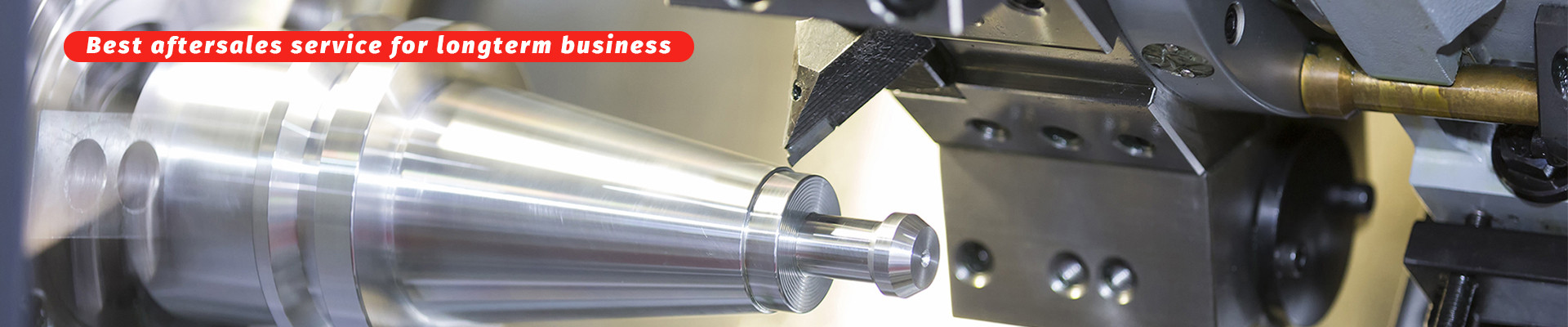
GSK offers a range of Flat Bed CNC Lathe Machines designed for precision turning of shafts, sleeves, discs, and other rotational components. With different machining capacities and configurations, our CK and CAK series provide options for manufacturers handling various workpiece diameters, turning lengths, and production requirements.
As a CNC machine manufacturer, GSK supplies flat bed CNC lathes for general metalworking, automotive components, hardware production, and machinery manufacturing. Whether you are looking for a compact machine for smaller components or a larger model for longer workpieces, you can compare our available models according to machining dimensions, spindle specifications, tooling configurations, and processing requirements.
A Flat Bed CNC Lathe Machine is suitable for turning workpieces with cylindrical, conical, and other rotational profiles. Depending on the machine configuration and tooling, it can perform operations such as external and internal turning, facing, grooving, and threading.
GSK flat bed CNC lathes can be considered for a variety of manufacturing applications.
Shafts and sleeves are common components in mechanical transmission systems and industrial equipment. Their production often requires accurate control of outer diameters, inner bores, shoulders, and cylindrical surfaces. A suitable flat bed CNC lathe can handle these turning operations according to the workpiece dimensions and required tolerances.
Automotive and motorcycle manufacturing involves various rotational metal components, including shafts, bushings, bearing-related parts, and other machined fittings. Flat bed CNC lathes can support repetitive turning operations and help manufacturers maintain consistent machining dimensions across production batches.
Hardware manufacturers process different metal components with cylindrical surfaces, stepped profiles, and threaded features. A flat bed CNC lathe with suitable spindle and tooling configurations can be used for turning these components, supporting both individual part production and repeated machining tasks.
Valve components, pipe fittings, and industrial connectors often require turning of external diameters, internal bores, end faces, and threaded sections. The spindle bore, workpiece clamping method, and available machining length should be considered when selecting a machine for these applications.
Manufacturers of industrial machinery need to process a wide range of rotating components, such as bushings, flanges, pins, rollers, and machine shafts. Flat bed CNC lathes offer a practical solution for these turning requirements, with model selection depending on component size, material, and machining complexity.
Choosing the right Flat Bed CNC Lathe Machine requires matching the machine's working capacity and configuration with your actual workpieces. Instead of focusing on a single specification, buyers should consider the maximum machining diameter, turning length, spindle bore, tooling system, and production requirements together.
The machine's turning capacity determines the dimensions of workpieces it can accommodate.
Swing Over Bed: Indicates the maximum workpiece diameter that can rotate over the machine bed.
Swing Over Cross Slide: Determines the maximum diameter that can rotate above the cross slide, which is usually smaller than the swing over bed.
Distance Between Centers: Helps determine the maximum workpiece length that can be supported between the spindle and tailstock centers.
Z-Axis Travel: Determines the available longitudinal movement of the cutting tool.
For longer shafts, select a machine with sufficient distance between centers and Z-axis travel. For larger-diameter components, pay closer attention to swing over bed and swing over cross slide. Allow additional space for workholding and machining operations when confirming the required capacity.
Spindle bore is particularly important when machining bar stock or workpieces that need to pass through the spindle. A larger spindle bore may accommodate larger-diameter materials, but the final selection should also consider the bar diameter, chuck specifications, spindle nose, and workholding requirements.
For manufacturers processing different types of workpieces, the chuck and clamping method should also match the component's shape, dimensions, and machining conditions.
Spindle speed affects the cutting conditions and the range of turning operations a machine can perform. Different materials, workpiece diameters, and cutting tools require different spindle speed ranges.
When evaluating a flat bed CNC lathe, consider spindle speed, motor power, spindle torque, and speed adjustment methods together. The selected configuration should match the materials being processed and the required surface finish.
The tooling system determines how cutting tools are installed and changed during production.
Gang Tool Post: Suitable for certain compact turning machines and applications involving multiple pre-installed tools.
Electric Tool Post: Allows automatic indexing between installed tools for different turning operations.
Hydraulic Turret: Can be considered for production processes requiring multiple tool positions, subject to the available model configuration.
Tooling selection should take into account the number of machining operations, tool dimensions, workpiece geometry, and production frequency. Buyers should confirm the standard and optional tooling configurations of each model before ordering.
When machining long or slender workpieces, suitable support is important for reducing deflection during cutting. A tailstock can support the workpiece from the opposite end of the spindle, depending on the machining setup.
Consider the tailstock quill diameter, travel, taper, and the type of center required for your workpieces. These specifications are particularly relevant when processing longer shafts or components that need additional support.
The expected production volume and machining workflow also influence machine selection. Buyers should consider the number of parts produced, machining cycle requirements, tool-changing frequency, and the operator's programming needs.
The CNC control system should be compatible with the intended machining operations and workshop requirements. Available control options and machine configurations should be confirmed with GSK according to the selected model.
GSK's Flat Bed CNC Lathe Machine range includes CK and CAK series models with different turning capacities and configurations. The product selection covers various workpiece diameters, spindle bores, machining lengths, and tooling arrangements.
The CK6120 and CK6125 are compact two-axis CNC lathe models. According to their published specifications, the machines feature swing-over-bed capacities of 190 mm and 230 mm respectively, with gang-type tool posts and spindle speed ranges of 150–2500 rpm. They can be considered for smaller rotational components and precision turning tasks.
The CK6132 and CK6136 models provide additional turning capacity for general metalworking applications. Depending on the selected model, available configurations include different center distances, spindle bores, and tool post arrangements. These models can be evaluated for shafts, sleeves, hardware components, and other rotational parts.
These models belong to the larger-capacity range of GSK flat bed CNC lathes. Buyers can compare their swing capacities, machining lengths, spindle specifications, and tooling configurations according to the dimensions and weight of their workpieces.
The CAK V-series provides additional machine size options for different turning requirements. Published specifications cover swing-over-bed capacities of 400 mm, 500 mm, and 600 mm for the CAK6140V, CAK6150V, and CAK6160V respectively. Different center distances and spindle configurations are available according to the product specifications.
Each model has its own machining capacity and configuration. Please refer to the individual product pages for detailed specifications, or contact GSK to compare suitable models based on your workpiece drawings and production requirements.
When evaluating a Flat Bed CNC Lathe Machine, buyers should consider the machine's structural design, spindle system, guideways, and tooling configuration. These factors work together to influence machining stability, cutting performance, and production efficiency.
The horizontal flat bed layout provides a conventional machine arrangement for CNC turning. It supports different workpiece sizes and tooling setups, making it suitable for a wide range of general metalworking and rotational component machining requirements.
Spindle bore, spindle nose, speed range, and motor power are important specifications when matching a machine to different workpiece dimensions and cutting conditions. Buyers should select a spindle configuration according to the material, bar diameter, chuck, and required machining operations.
Guideways and transmission components affect axis movement, machine positioning, and overall machining performance. When comparing different models, consider the guideway design, ball screw specifications, and axis travel in relation to the intended machining tasks.
Different tool post and turret arrangements support different machining workflows. The appropriate configuration depends on the number of tools required, the complexity of the workpiece, and the frequency of tool changes during production.
For applications involving longer shafts and similar components, a tailstock can provide additional workpiece support. Its quill specifications and available travel should be checked to ensure compatibility with the intended workpiece dimensions.
Note: Specific structural features, components, and configurations vary by model. Please refer to the corresponding product specifications for confirmation.
Shandong GSK CNC Equipment Co., Ltd. has more than 30 years of experience in CNC machine tool design and manufacturing. We provide a range of CNC machining centers, CNC lathes, milling machines, and other industrial machine tools for customers in international markets.
With over 30 years of experience in machine tool design and manufacturing, GSK has developed a broad product range covering different machining processes and industrial requirements. This experience provides a foundation for supplying flat bed CNC lathes and other machine tools to global buyers.
GSK's manufacturing facility covers 100,000 square meters, with more than 200 employees and an annual output of 2,500 machine sets. Quality inspection procedures are implemented as part of the manufacturing process to help ensure that equipment meets the required quality and performance standards before delivery.
Different manufacturers have different workpiece dimensions, machining processes, and production requirements. GSK supports OEM and ODM cooperation, allowing customers to discuss suitable machine specifications and configurations according to their applications.
GSK provides an 18-month warranty for its machines. Our team also assists customers with product selection and equipment-related inquiries, helping them evaluate suitable machine models and configurations for their manufacturing needs.
Looking for a Flat Bed CNC Lathe Machine for your workshop? Share your workpiece drawings, material, dimensions, and machining requirements with GSK to discuss suitable models and available configurations.
A Flat Bed CNC Lathe Machine is a computer-controlled turning machine with a horizontal flat bed structure. It is used to process rotational workpieces through operations such as external turning, internal turning, facing, grooving, and threading, depending on the machine configuration and tooling.
Flat bed CNC lathes can process various machinable metals, including carbon steel, alloy steel, stainless steel, aluminum, and other materials. The suitable cutting conditions depend on material properties, machine capacity, spindle performance, and tool selection.
The main difference is the bed structure and machine layout. A flat bed CNC lathe has a horizontal bed arrangement, while a slant bed CNC lathe uses an inclined bed structure. Their suitability depends on workpiece dimensions, machining requirements, production volume, and the machine's available configurations.
Start by identifying the maximum workpiece diameter, machining length, material, and weight. Then compare swing over bed, swing over cross slide, distance between centers, spindle bore, spindle speed, and tooling configuration to find a suitable model.
Spindle bore determines the maximum diameter of bar material that can pass through the spindle, subject to the workholding arrangement. A suitable spindle bore is important for manufacturers processing bar stock or longer workpieces that require through-spindle feeding.
Yes. A flat bed CNC lathe with a suitable CNC control system, threading function, and compatible tooling can perform thread-cutting operations. The available thread types and machining capabilities should be confirmed according to the selected model.
Standard configurations refer to the components supplied with a specific machine model, while optional configurations are additional features or components selected according to customer requirements. These may involve chuck types, tailstock arrangements, tool posts, spindle options, and CNC control systems. Please confirm the configuration details with GSK before ordering.
To help GSK recommend a suitable machine, buyers should provide:
Workpiece drawings or reference images.
Workpiece material and dimensions.
Maximum turning diameter and machining length.
Required spindle bore and clamping method.
Required turning and threading operations.
Machining accuracy requirements.
Expected production volume.
Preferred CNC system and optional configurations, if applicable.
Choosing a suitable Flat Bed CNC Lathe Machine means matching the machine's turning capacity, spindle specifications, and tooling configuration with your actual production requirements. GSK offers different CK and CAK series models for manufacturers processing shafts, sleeves, discs, hardware components, and other rotational parts.
If you are comparing a Flat Bed CNC Lathe For Sale, our team can help you evaluate available models according to workpiece dimensions, machining operations, and production needs.
For manufacturers requiring other CNC turning solutions, you can also explore our High-Precision CNC Lathe range to review additional machine tool options.
Contact GSK with your workpiece drawings and technical requirements to discuss suitable models, configurations, and quotation details.
View More
Navigation
Tel.: +86 632 5083 879
Mob.: +86 151 6326 5369
Wechat: +86 151 6326 5369
E-mail: info@gskequipment.com
WhatsApp: +86 151 6326 5369