10. 08, 2026
Flat Bed vs. Slant Bed CNC Lathe: Which One Fits Your Production?
Flat bed and slant bed CNC lathes can both produce accurate turned components, but they are optimized for different production priorities.
A flat bed machine often provides a practical structure for long shafts, larger workpieces, broad turning capacity and general industrial work.
A slant bed machine places the working area at an angle, supporting chip evacuation, compact tool movement and automated batch production.
The choice should not be reduced to “flat bed for low cost” and “slant bed for high precision.”
Accuracy and productivity depend on the complete machine, tooling, workholding and process.
The best lathe is the one whose structure, spindle, chuck, turret, guideways and available options match the workpiece family and required output.
Understand the Structural Difference
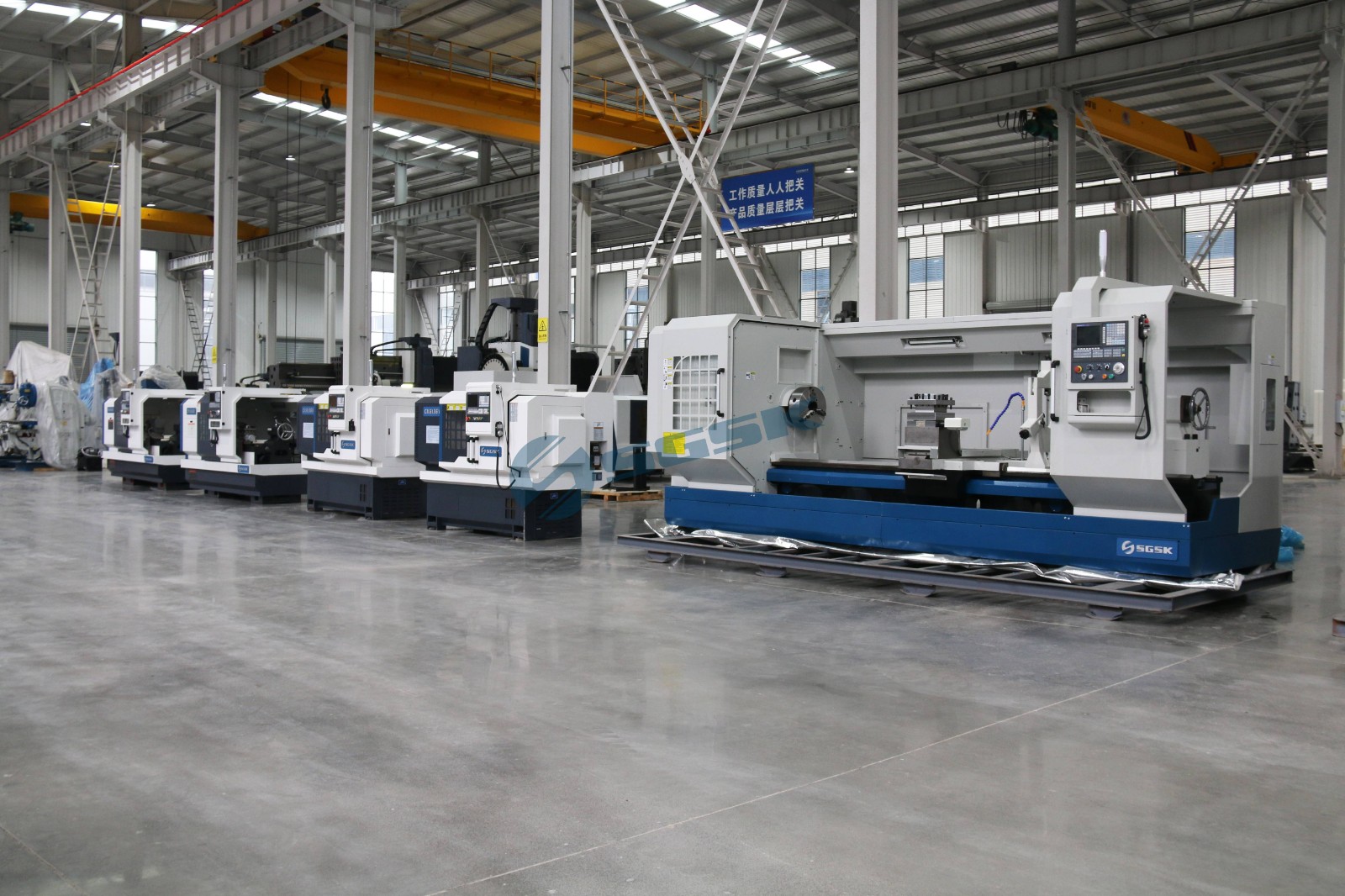
On a flat bed CNC lathe, the main bed and guideway arrangement are generally horizontal.
The headstock, carriage and tailstock are positioned along a familiar open layout.
This architecture is commonly used for machines handling long shafts, larger swing diameters and work that benefits from accessible setup and tailstock support.
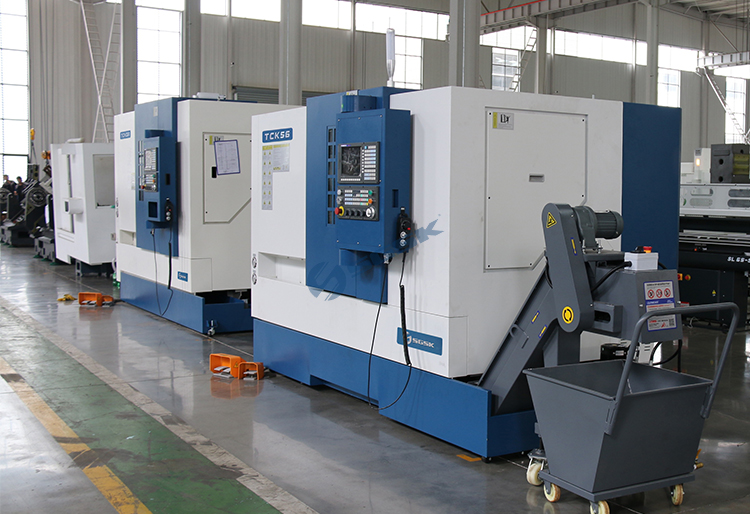
On a slant bed CNC lathe, the guideway and working zone are inclined.
Gravity helps direct chips away from the cutting area, and the turret approaches the workpiece from an angled position.
The layout can support an enclosed production cell and is often associated with hydraulic chucks, multi-station turrets, live tooling or automated loading, depending on the selected model.
These descriptions explain the general categories.
They do not define the standard equipment of every machine.
A manual or hydraulic chuck, electric or hydraulic turret, live tooling, Y-axis, tailstock and chip conveyor must each be confirmed for the exact model and quotation.
Choose by Workpiece Shape and Size
Flat bed machines are often considered for shafts, rollers, sleeves, pipes, couplings, flanges and general industrial components.
The horizontal layout can suit long center distances and tailstock-supported work.
Buyers machining repair parts, mixed batches or components with substantial length may value the accessible setup and broad capacity available in this category.
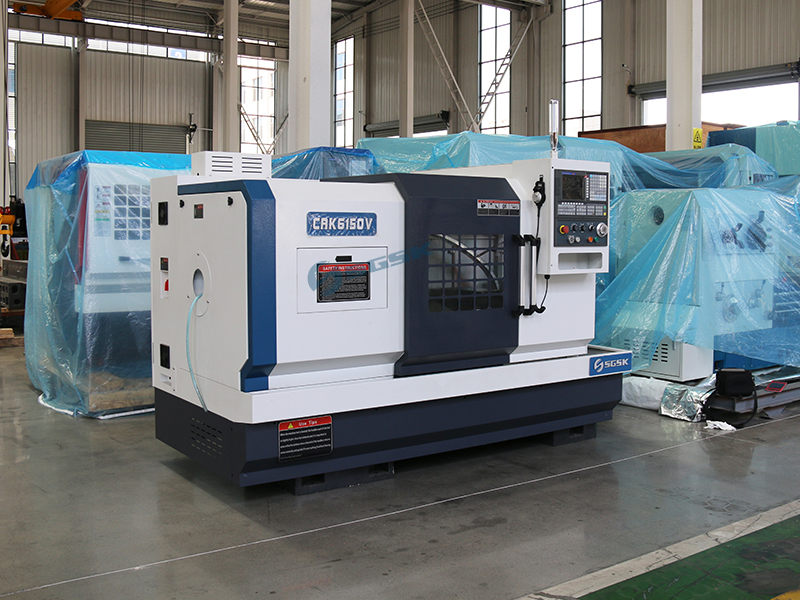
For example, the CAK6150V flat bed CNC lathe is presented with several center-distance choices and a defined standard and optional configuration.
Those specifications apply to that product page and should not be copied to other flat bed machines.
Slant bed machines are frequently selected for compact shafts, sleeves, bushings, fittings, valve parts and other components produced in repeated batches.
The enclosed working zone and chip flow are useful when cycle continuity matters.
Models with live tooling or additional axes may combine turning with drilling, tapping or milling, reducing secondary operations when the part requires them.
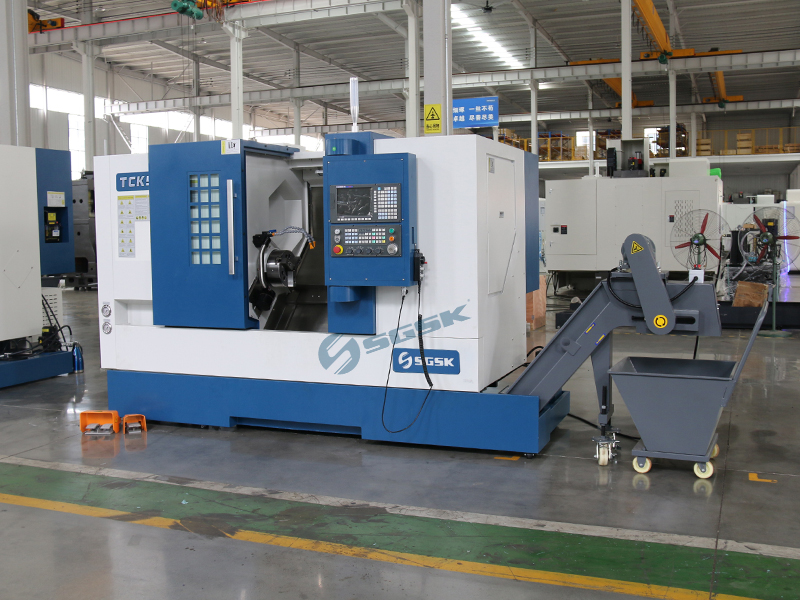
A TCK56 slant bed CNC lathe represents one model within the category, but buyers should verify its current data separately.
The availability of a feature on a TCK-series model does not mean it is standard on all slant bed lathes.
Compare Long-Workpiece Support
If the main products are long shafts, begin with distance between centers, spindle bore, tailstock arrangement, steady-rest requirements and the ratio of length to diameter.
A flat bed CNC lathe often offers a straightforward platform for these applications.
Operator access can make it easier to position long workpieces, support them and monitor the setup.
A slant bed lathe can also machine shafts, but the specific envelope, chuck-to-tailstock distance and automation package must suit the part.
For a very long or flexible shaft, the support strategy may matter more than the bed angle.
Tailstock force, center condition, steady support, cutting sequence and workpiece balance all influence the result.
When requesting a quotation, provide both finished length and raw-stock length.
Also identify the clamping allowance and whether the part will pass through the spindle bore or be held between chuck and tailstock.
Evaluate Chip Control and Continuous Production
Chip management is one of the clearest practical differences.
The inclined working area of a slant bed machine helps chips move away from the tool and workpiece.
This can be valuable in repeated production where chip accumulation could interrupt the cycle or damage the surface.
Flat bed machines may require more attention to chip removal depending on the enclosure, chip pan, conveyor arrangement, material and cutting conditions.
That does not make them unsuitable for production, but chip flow should be reviewed with the intended material.
Long stringy chips from some steels create different challenges from short cast-iron chips or aluminum swarf.
A chip conveyor should not be assumed.
Confirm whether the exact machine includes one as standard, offers it as an option or uses another removal arrangement.
Coolant delivery, filtration and chip-breaking toolpaths must be considered together.
Match the Turret to the Process
Tooling determines how many operations can be completed in one setup.
A basic tool post or turret may be sufficient for external turning, facing, grooving, threading and boring.
A multi-station hydraulic turret can reduce indexing time and support repeated cycles.
Live tooling can add drilling, tapping or milling, while a Y-axis may be required for certain off-center features.
More capability is not automatically better.
A workshop producing simple shafts may gain little from a complex powered turret.
A manufacturer producing fittings with cross holes may reduce handling and work-in-process by choosing a turn-mill configuration.
Build an operation list before selecting the turret.
Count the tools, identify internal and external stations, and check tool-shank size, boring-bar clearance and interference around the chuck.
Confirm whether the turret shown in photographs matches the offered machine.
Compare Setup Flexibility and Automation
Flat bed CNC lathes can be attractive for job shops, maintenance departments and plants processing varied workpieces.
Their accessible layout often supports manual loading and flexible workholding.
When batches change frequently, simple setup and broad part capacity may be more valuable than maximum automation.
Slant bed CNC lathes are commonly integrated into repeated production.
Hydraulic workholding, bar feeding, parts catching or robotic loading may be available depending on the machine.
Automation makes sense when the part, raw material and process are stable enough to run consistently.
It also requires attention to chip control, tool life, in-process checking and safe recovery after interruptions.
Regional labor cost can influence the automation business case, but it should not be the only factor.
Customers in Asia, Europe, North America and South America should also review local technical support, operator skill, spare-part planning, safety requirements and power conditions.
Look Beyond Purchase Price
The machine price is only one part of the investment.
Compare chuck and jaw requirements, tool holders, boring bars, coolant equipment, chip handling, bar feeder or robot interface, installation, training and preventive maintenance.
Floor-space and foundation requirements may also differ.
A simpler flat bed machine can be economically effective for low-volume, high-mix work or long components.
A slant bed machine may justify a higher project cost when faster non-cutting movement, efficient chip evacuation and automation increase output for a stable part family.
The correct comparison is cost per accepted part under realistic utilization, not purchase price alone.
A Practical Selection Checklist
Start with a flat bed CNC lathe when your priorities include long workpieces, tailstock-supported shafts, broad general turning capacity, accessible setup and mixed production.
Review the available flat bed CNC lathe machines by actual swing, center distance, spindle bore and tooling configuration.
Start with a slant bed CNC lathe when your priorities include repeated batches, efficient chip evacuation, compact tool movement, enclosed operation and possible automation or turn-mill processing.
Compare slant bed CNC lathe machines according to part diameter, length, spindle bore, turret and required secondary operations.
For either type, confirm:
Maximum raw and finished workpiece dimensions.
Workpiece weight and balance.
Bar diameter or spindle-bore requirement.
Required center distance and tailstock support.
Chuck type and clamping method.
Tool count and turret type.
Material, stock allowance and cutting duty.
Batch volume and target loading method.
Critical tolerance and surface finish.
Standard versus optional equipment for the selected model.
Final Decision
Select the machine around the workpiece family that generates revenue most often.
A flat bed lathe is not outdated simply because a slant bed design offers stronger automation potential.
A slant bed machine is not automatically the right investment simply because it looks more production-oriented.
Each structure creates value under the right manufacturing conditions.
Inquiry CTA: Unsure whether your production needs a flat bed or slant bed CNC lathe?
Send your turning requirements, including drawings, material, diameter, length, tolerance, batch size and required operations.
SGSK Equipment can recommend a model and clearly identify its standard and optional configuration in the quotation.
Navigation
Tel.: +86 632 5083 879
Mob.: +86 151 6326 5369
Wechat: +86 151 6326 5369
E-mail: info@gskequipment.com
WhatsApp: +86 151 6326 5369